
Fabric, Color, & Memory: Ingredients in Designing
Models: Eva Sharma, Bianca Liau; Stylist: Eva Braasch
By Brent Chou
Spring showcases often bring out the boldest of statements every year, each designer approaching the runway with a different eye and a different sense of purpose. For some, innovation means distancing themselves from all familiar references. For others it means shaping what already exists into something that feels new again. Designer Eva Braasch, a junior at the time majoring in Economics alongside Textiles and Apparel, works somewhere in the middle. Balancing sentimental memory with experimentation and transforming the simple act of choosing fabrics into an artistic compass.
When I asked Braasch how she first stepped into fashion her answer began with her grandmother. She learned to sew at a young age. Growing older with her grandmother and taking in the rhythms of craft. “At first I just learned to sew,” she explained but eventually she learned more about designing. What began as a skill turned into a curiosity, which evolved into passion. That origin story becomes a cornerstone of her work. Her designs are handcrafted not just in technique but in spirit.
This year’s runway did not have a designated theme, something that would have unsettled some designers but instead offered Braasch a kind of creative freedom. Without constraints she turned toward the things that naturally inspire her, fabric, texture, and color. She spoke about choosing materials that already speak to her, allowing the fabric itself to spark the direction of the garment. It is an intuitive process, driven less by grand statements and more by what she calls “making designs based on the fabrics I find and I like.”
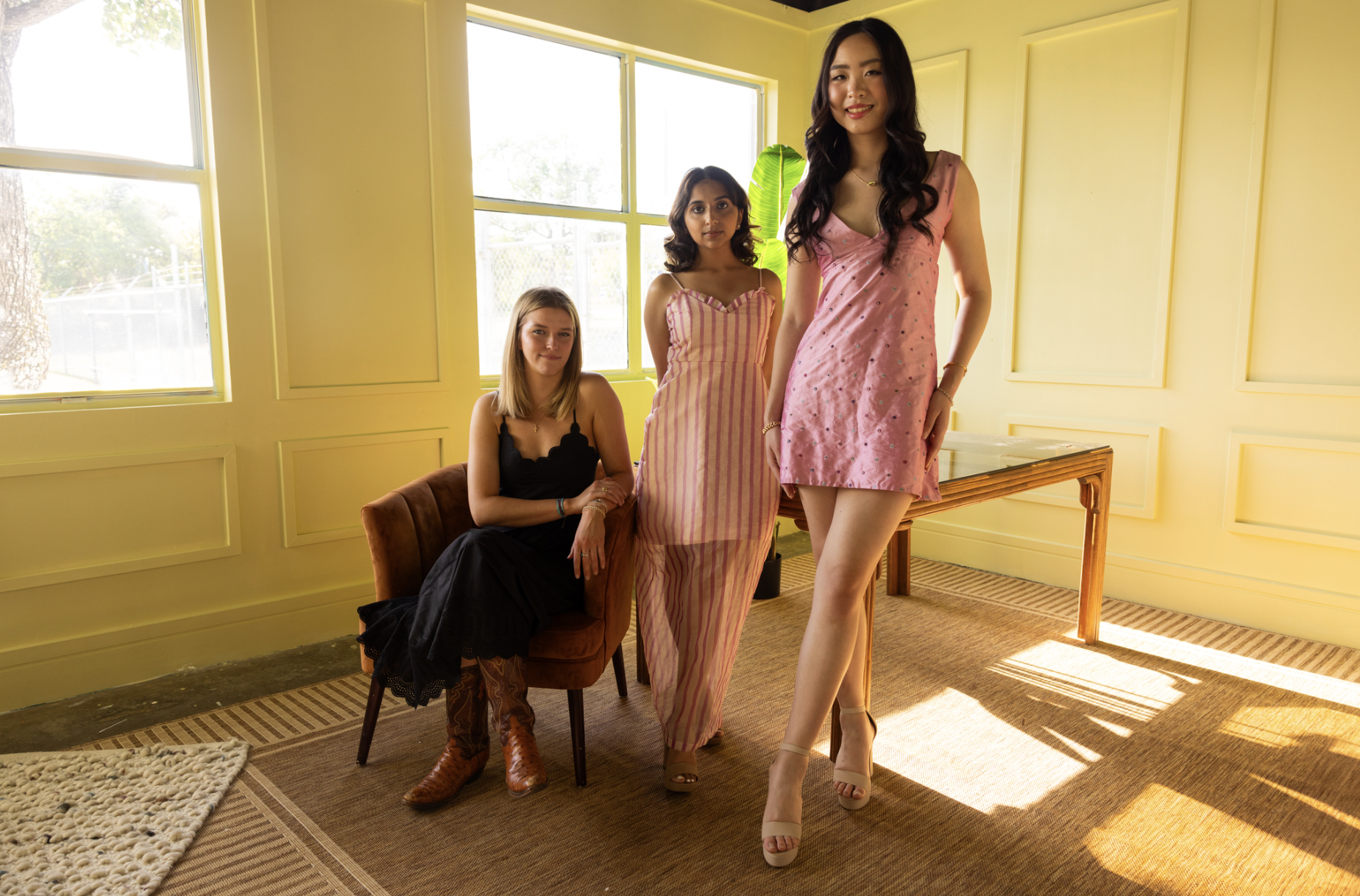
One model wears a long pink and white striped dress. The dress has a soft structure and moves easily with her, giving it a gentle relaxed feel while still looking polished. The second model wears a shorter pink dress with small subtle floral patterns. The design is fun, bright, and youthful, with a simple silhouette that makes it easy to appreciate at first glance. Together the two outfits show Braasch’s eye for color and her ability to create pieces that feel light, fresh, and perfect for spring.
An especially compelling aspect of Braasch’s process is her ability to blend past and present. She mentioned often taking clothes from others, pieces with their own history, and combining them to make, as she described, “the best parts of dresses she’s ever had.” It is a thoughtful perspective, she is not merely upcycling but curating from emory. Her approach reveals a designer who values the story behind a garment as much as the final silhouette.
Looking forward, Braasch sees fashion playing a continuing role in her life. She shared that she would love to someday start her own business but also holds a strong interest in technical design. A field that merges precision, structure, and the kind of detail-oriented thinking she has already shown. With her blend of analytical study and artistic instinct she stands at a promising intersection of creativity and craft.
What Braasch brings to this year’s showcase is not just two spring looks, it is a story about where inspiration comes from: childhood lessons, fabrics that spark something unexpected, and the joy of reconstructing something from what others might consider complete. If these designs are any indication of her future, there is much more to anticipate from her in the years ahead